

- Your cart is empty
- Continue shopping
-
sonoriagr
- Posted on
- Categories:Eco Technology
- 0 comments
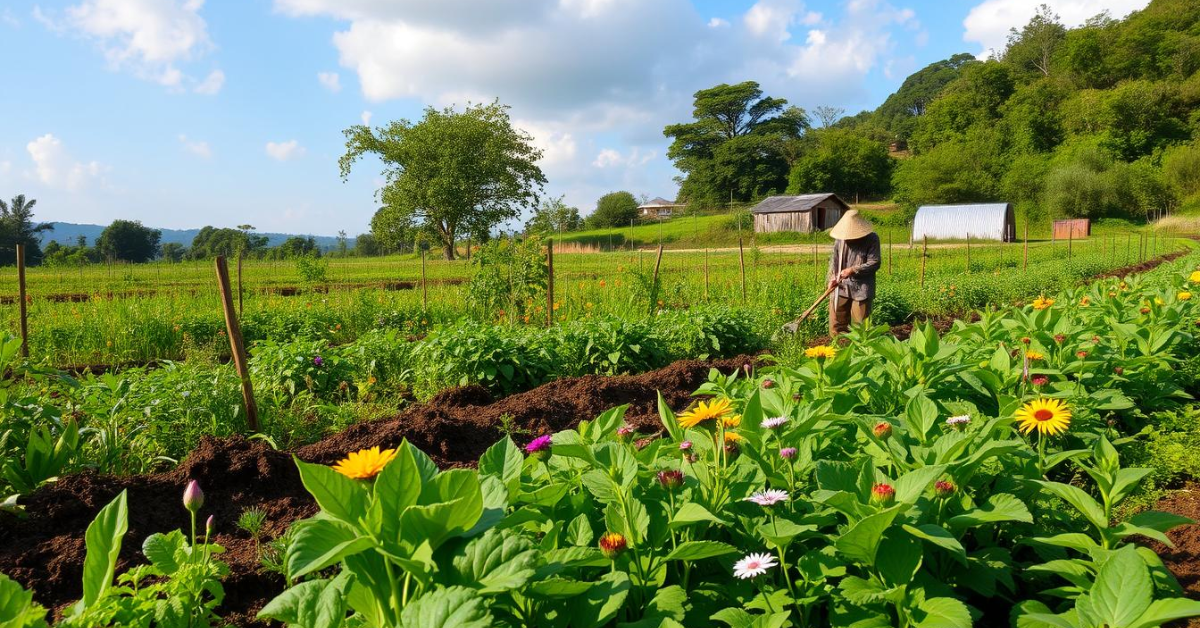
India’s farms feed over 1.4 billion people, yet the very soil, water, and climate that make this possible are under growing strain. That is why sustainable farming in India is no longer a niche idea, it is quickly becoming the backbone of the country’s agricultural future. From smallholders in Punjab to fruit growers in Maharashtra, farmers are shifting toward practices that protect resources while improving yield and income. This article walks through 10 practical, field-tested approaches that any Indian farmer can adopt today, along with the numbers that show why they matter.
Organic Farming Solutions in India for Healthier Soil
India’s soil health card scheme found that nearly 5 out of 6 samples tested were deficient in at least one major nutrient. Rebuilding that health starts with reducing dependence on chemical inputs.
Organic farming solutions in India are not just about avoiding chemicals; they combine traditional knowledge with modern soil science to keep land productive for generations.
Crop Rotation for Long-Term Soil Fertility
Alternating cereals with legumes such as moong or urad naturally replenishes nitrogen. Farmers following a 3-year rotation cycle report up to 20% higher yields within five seasons, according to ICAR field studies.
Vermicomposting and Organic Manure Application
A single vermicompost unit can convert 1 tonne of farm waste into nutrient-rich manure within 45 days. This cuts fertiliser costs by nearly 30% for many small farms.
Biofertilisers and Biopesticides for Chemical-Free Crop Protection
Microbial inoculants like Rhizobium and Azotobacter help roots absorb nutrients more efficiently, reducing urea use by up to 25% without hurting yield. Together, these organic farming solutions in India show that healthier soil and higher yields go hand in hand.
Sustainable Agriculture Practices India Rely On for Water and Land Management
Water scarcity touches over 600 million Indians, and agriculture consumes nearly 80% of the country’s freshwater. Farmers who manage this resource wisely protect both their land and their long-term income.
Drip and Micro-Irrigation for Water-Efficient Crops
Drip systems cut water use by 30 to 50% compared to flood irrigation, while boosting yields by roughly 20% in crops like cotton and sugarcane.
Rainwater Harvesting and Watershed Development
Check dams and farm ponds recharge groundwater and extend irrigation by 2 to 3 months into the dry season, a change many Maharashtra villages have already seen.
Agroforestry and Mixed Cropping for Resilient Land Use
Planting trees like neem or subabul alongside field crops reduces soil erosion by up to 40% and adds a secondary income stream from timber or fodder.
Intelligent Farming Solutions in India for the Next Generation of Growers
Technology is closing the gap between traditional methods and precision output. Companies are helping farmers combine sustainability with smart tools that reduce waste and raise returns.
Precision Farming with Soil and Weather Sensors
Sensor-based irrigation scheduling can cut water waste by 15 to 20% while improving nutrient timing, based on pilot programmes across Karnataka and Telangana.
Solar-Powered Equipment for Lower Input Costs
Solar insect traps and solar-powered pumps reduce diesel dependency, saving farmers roughly Rs 15,000 to Rs 20,000 per acre annually in fuel and pesticide costs. Field results from Sonoris Farms Agrotech customers show that intelligent farming solutions in India are proving that sustainability and profitability can grow together.
Why Sustainable Agriculture Practices India Need Profitable, Farmer-First Solutions
Ultimately, sustainable farming in India succeeds only when it pays the farmer back, not just the planet. The final two practices focus on turning ecological gains into real income.
Integrated Pest Management to Cut Losses Naturally
Pest damage costs Indian farmers an estimated Rs 90,000 crore every year. IPM techniques, including pheromone traps and biological predators, can reduce pesticide use by up to 50% while holding crop losses below 10%.
Crop Diversification and Direct Market Access for Better Margins
Growing a mix of cereals, pulses, and horticulture crops spreads risk across seasons. Farmers selling directly through FPOs and online markets report 15-25% higher realisation than at traditional mandis.
Conclusion
Sustainable farming in India is more than an environmental responsibility—it’s a practical way to improve soil fertility, conserve water, reduce input costs, and increase long-term farm profitability. By adopting practices such as organic farming, crop rotation, precision irrigation, integrated pest management, and crop diversification, farmers can build resilient farms that thrive despite changing climate conditions.
At Sonoris Farms Agrotech, we are committed to empowering Indian farmers with innovative, sustainable, and intelligent farming solutions that enhance productivity while protecting natural resources. Whether you’re looking to improve soil health, optimise irrigation, or embrace modern agritechnologies, Sonoris Farms Agrotech is your trusted partner in building a greener, more profitable future for Indian agriculture. Together, let’s cultivate smarter farms and a sustainable tomorrow.
Frequently Asked Questions
1. What is the most cost-effective sustainable farming practice for small farmers in India?
Vermicomposting and crop rotation are the most affordable starting points, needing little upfront investment.
2. How much water can drip irrigation save compared to flood irrigation?
Drip irrigation typically saves 30 to 50% more water than traditional flood methods.
3. Are organic farming solutions in India suitable for all crop types?
Most cereals, pulses, and horticulture crops adapt well to organic methods within 2 to 3 seasons.
4. Can technology really make farming more sustainable?
Yes, sensor-based irrigation and solar equipment cut both water and energy waste significantly.
5. How does integrated pest management reduce costs for farmers?
IPM lowers pesticide spending by up to 50% while keeping crop losses under control.
