

- Your cart is empty
- Continue shopping
-
sonoriagr
- Posted on
- Categories:Eco Technology
- 0 comments
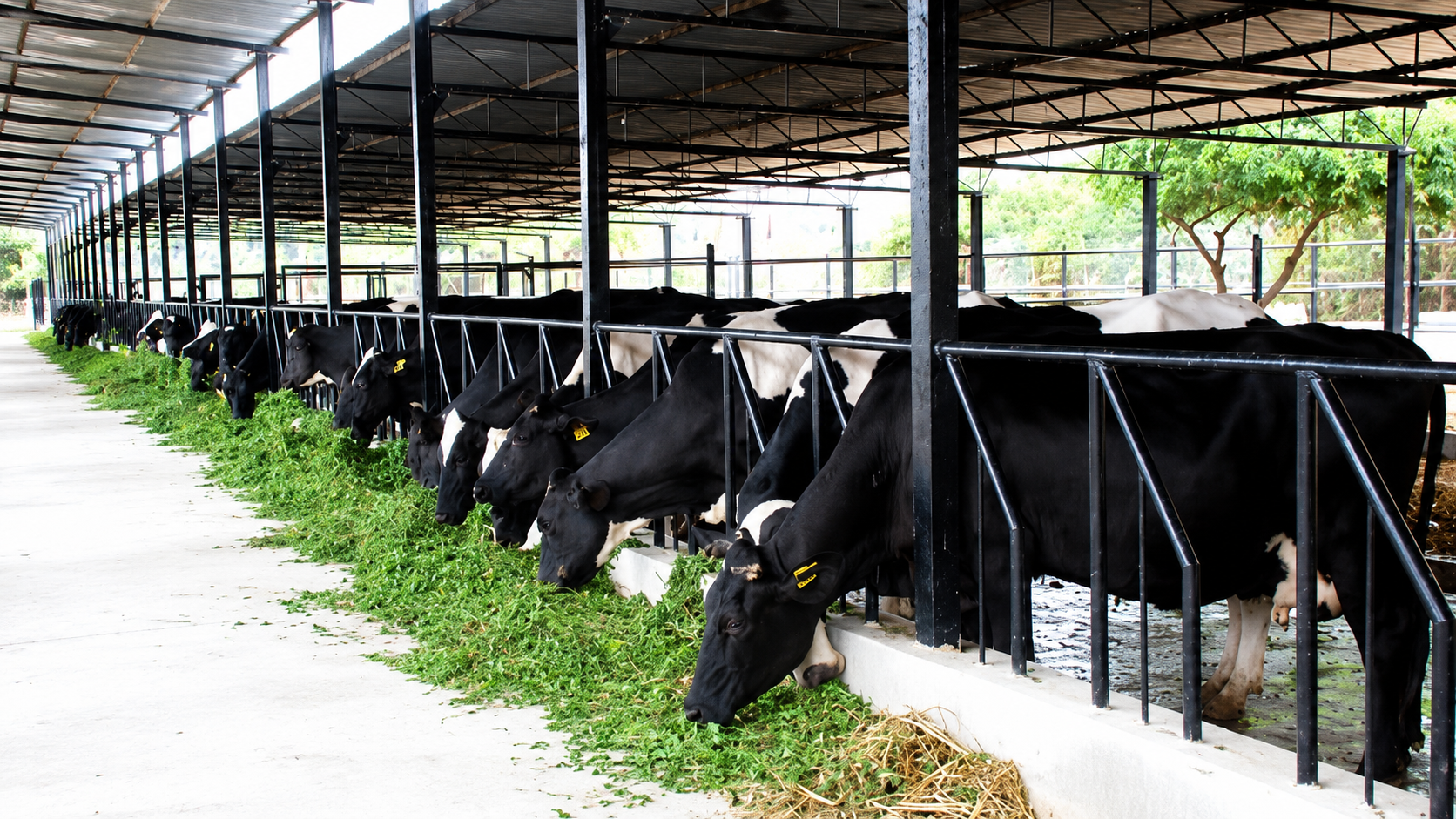
Livestock farming in India supports over 20 crore rural households, and for most of them, feeding is the single largest daily operational task on the farm. It is also one of the most wasteful. Studies by the National Dairy Development Board estimate that feed wastage in poorly designed feeding setups can run as high as 25 to 30% of total fodder provided each day. Choosing the right cattle feeder for farms in India is not just a matter of convenience. It directly affects feed efficiency, animal health, and the profitability of every litre of milk or kilogram of meat the farm produces.
The Indian livestock sector has changed significantly over the past decade. Mixed crop-livestock farms are more common than ever. Herd sizes are growing. Labour availability on farms is shrinking. And the economics of feeding have tightened as fodder prices increase across states. In this environment, selecting the right feeder system is a practical business decision, not an afterthought. This guide walks through exactly what to consider and how to match the right feeder to your animals, your farm, and your budget.
Why Your Feeder Choice Has a Bigger Impact Than Most Farmers Realise
Feed Wastage Is Silently Draining Farm Income
On a farm with 10 cattle or buffaloes, feeding 15 to 20 kg of fodder per animal per day, a 25% wastage rate means 37 to 50 kg of fodder is lost every single day. At even modest fodder costs of Rs 3 to Rs 6 per kg, that translates to Rs 111 to Rs 300 wasted daily, or Rs 40,000 to Rs 1,09,000 per year on a 10-animal farm. Over 5 years, the number becomes deeply significant.
Most of this waste is not visible in the moment. Fodder falls off poorly designed troughs. Animals scatter feed while eating. Wet or soiled feed near the ground is refused and discarded. A well-designed feeder reduces all of these losses at once, recovering a share of the farm’s feed budget every single day without requiring any change in management practice beyond the feeder itself.
Animal Health Outcomes Are Directly Tied to Feeding System Design
Beyond waste, the design of the feeding system affects how animals eat, and how they eat affects their health. Cattle forced to strain downward into floor-level troughs develop neck and spine stress over time. Animals eating from shared feeding points without enough space experience competitive feeding, where dominant animals overconsume and smaller or lower-ranking animals are underfed.
Under-nutrition in cattle and buffaloes suppresses milk output, delays reproductive cycling, and reduces immunity to common infections. The connection between a better feeder and a healthier, more productive herd is direct and measurable. Farms that upgrade their feeding infrastructure consistently report improvements in body condition scores and milk yield within one to two seasons.
Labour Efficiency: The Feeding System Farms Rarely Factor In
Feeding livestock manually three times a day is labour-intensive. On a farm with 20 or more animals, it can occupy one full-time worker for 3 to 4 hours daily. Well-designed agricultural feeding solutions for animals reduce the time and physical effort required per feeding cycle, freeing labour for other farm tasks or reducing the number of hired hands needed.
This efficiency gain is rarely quantified when farmers think about feeder investments, but it is real and recurring. A Rs 750 plastic feeding tray that saves 30 minutes of daily cleaning and refilling pays back its cost in labour value within a week.
A Practical Guide to Feeder Types Available in India Today
Understanding the Main Categories of Farm Animal Feeders
The variety of feeder products available for Indian farms has expanded considerably in recent years as agricultural technology in India has moved into livestock management. Farmers now have access to everything from basic moulded plastic feeding trays for individual animals to modular trough systems, wall-mounted feeders for goat sheds, and integrated hydroponic fodder trays that deliver fresh green feed daily.
The table below summarises the main feeder types, their best use cases, and key trade-offs:
| Feeder Type | Best For | Key Benefit | Limitation |
| Trough / Manger | Cattle, buffaloes | High capacity, shared feeding | Difficult to move |
| Individual Feeder Tray | Goats, sheep, calves | Controlled portion feeding | Needs more units at scale |
| Hanging / Wall-mount Feeder | Goats, small livestock | Space-saving, hygienic | Limited to smaller animals |
| Portable Plastic Feeder | Mixed livestock farms | Lightweight, easy to clean | Lower durability under heavy use |
| Hydroponic Fodder Tray | All ruminants | Fresh feed daily, no wastage | Requires water and setup space |
Individual Feeding Trays: Precision and Control for Smaller Animals
For goat and sheep farms, individual feeding trays are among the most effective tools available. They allow portion-controlled feeding, which is critical for managing feed costs when animals have different nutritional requirements based on age, pregnancy status, or lactation stage. A goat kid needs very different feed volumes and types compared to a dry adult doe or a lactating one.
Plastic animal feeder for farming trays designed for goats and small ruminants are lightweight, easy to clean, and resistant to the mould and bacterial buildup that affects wooden or metal troughs in humid Indian conditions. A standard plastic goat feeding tray priced around Rs 750 serves one animal for several years with minimal maintenance, making it among the highest ROI items on any small ruminant farm.
Trough and Manger Systems for Cattle and Buffalo Herds
For larger ruminants including cattle, buffaloes, and bullocks, a trough or manger system sized appropriately for the herd is the standard feeding infrastructure. The key dimension to get right is linear feeding space per animal. Dairy cattle require a minimum of 60 to 75 centimetres of trough width per animal during feeding. Insufficient space leads to dominance-driven competition and the under-nutrition problems described earlier.
Trough height also matters. A trough positioned too low causes the forward lean and neck strain mentioned above. The ideal feeding height for cattle is approximately at withers level, allowing a natural head position during eating. Farms that invest in correctly dimensioned trough systems see measurable improvements in feeding efficiency and, over time, in herd body condition.
Modern Feeding Technology: What Progressive Indian Farms Are Doing Differently
Hydroponic Fodder Systems as a Feeding and Feed-Production Tool
One of the most significant shifts in agricultural feeding solutions for animals over the past five years in India is the adoption of hydroponic fodder systems, particularly on dairy and goat farms facing green fodder shortages. A hydroponic fodder tray produces 6 to 8 kg of fresh green sprouts from 1 kg of grain seed in 7 to 8 days, without soil, without large land areas, and with very low water consumption compared to conventional fodder cultivation.
The nutritional profile of hydroponically sprouted fodder is significantly higher than dry feed. Digestibility improves, dry matter intake increases, and animals consume it eagerly without refusal. For dairy farms, multiple field reports from Maharashtra, Karnataka, and Rajasthan document milk yield increases of 10 to 15% within 30 days of introducing fresh hydroponic fodder as a daily supplement. On goat farms, it has been linked to faster weight gain in meat breeds and improved coat condition in breeding stock.
How Smart Feeder Design Connects to Broader Farm Productivity
The link between feeding system design and farm output is one of the clearest examples of how agricultural technology in India creates compounding returns. A better feeder reduces waste. Reduced waste means more of the feed budget reaches the animal. More feed reaching the animal improves body condition. Better body condition improves milk yield, reproductive performance, and disease resistance. Each improvement in the chain builds on the one before it.
Farms that modernise their feeding infrastructure as part of a broader livestock management upgrade, rather than as an isolated purchase, consistently see larger productivity gains than those that address feeding in isolation. The feeder is a gateway investment that unlocks the value of improvements in nutrition, genetics, and health management.
Hygiene Standards: The Feeder Feature Most Often Overlooked
In India’s climate, a feeding trough or tray that retains moisture becomes a breeding ground for bacteria, fungi, and parasites within 24 to 48 hours. Diseases including bovine mastitis, foot rot, and various gastrointestinal infections in cattle are frequently traced back to contaminated feeding equipment. Feeder materials that are non-porous, easy to clean, and resistant to cracking under temperature fluctuations dramatically reduce this risk.
Food-grade plastic feeders designed specifically for livestock have become the preferred choice for modern Indian farms for exactly this reason. They are smooth-surfaced, non-absorbent, and can be disinfected with standard farm sanitisers without degrading the material. The marginal cost difference over a wooden or low-grade metal trough pays back quickly in reduced veterinary costs and improved animal health outcomes.
Conclusion
Choosing the right cattle feeder for farms in India is one of the highest-return decisions a livestock farmer can make. The right feeder reduces daily waste, improves animal health, saves labour time, and creates the conditions for better milk and meat productivity across every season. The wrong one, or no structured feeder at all, quietly costs the farm far more than its replacement value each year.
For Indian farmers looking to upgrade their feeding infrastructure with products built for real farm conditions, Sonoris Farms Agrotech offers a tested range of animal feeders, hydroponic fodder systems, and livestock management tools across India. Visit sonori.in to explore the full range and find the right feeding solution for your animals and your operation.
Frequently Asked Questions (FAQs)
- How do agricultural feeding solutions reduce overall farm costs?
Efficient feeding systems help reduce fodder wastage, improve feed utilization, lower labor requirements, and support better animal health, ultimately reducing farm operating costs. - What type of animal feeder is best for goat farms?
Wall-mounted or individual plastic feeders are ideal for goat farms as they support portion control, minimize feed wastage, and are easy to clean and maintain. - How is agricultural technology improving livestock feeding systems in India?
Modern agricultural technologies such as hydroponic fodder systems and precision feeding solutions are improving hygiene, reducing waste, and increasing livestock productivity. - How does a hydroponic fodder system support animal feeding?
Hydroponic fodder systems produce fresh green fodder quickly and efficiently, providing nutritious feed that improves digestion, enhances animal health, and can help increase milk production.
