

- Your cart is empty
- Continue shopping
-
sonoriagr
- Posted on
- Categories:Eco Technology
- 0 comments
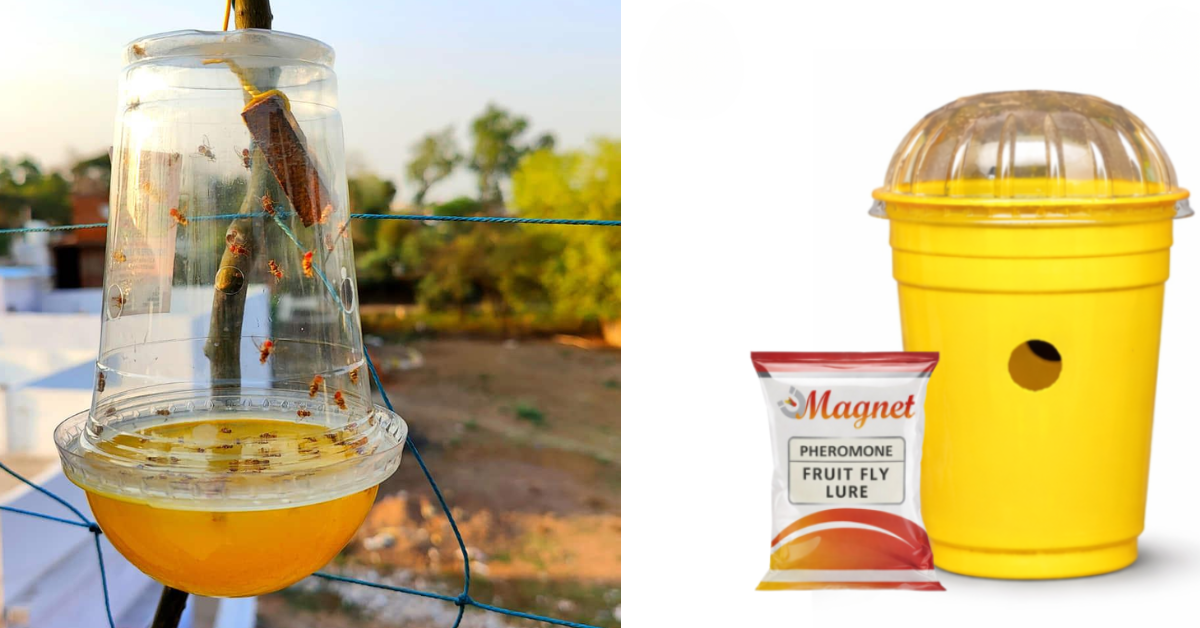
Every year, Indian farmers lose a staggering Rs 50,000 crore worth of fruit and vegetable produce to pest damage. A large portion of that loss is driven by a single, relentless pest: the fruit fly. Understanding why investing in a fruit fly trap in India before the season begins is not just smart farming; it is survival farming. The moment you spot fruit fly damage on your mango, guava, bitter gourd, or tomato crop, it is already too late. The larvae are inside the fruit, the damage is done, and no spray can reverse what has happened.
The solution is not reactive. It is proactive. Setting up the right trap system before the first adult flies appear in your field can mean the difference between a full harvest and a season-long loss. This guide breaks down exactly how these traps work, why pre-season deployment matters, and how organic pest control in India is making crop protection more effective, more affordable, and more sustainable for small and large farmers alike.
What Is a Fruit Fly Pheromone Trap and How Does It Work?
Understanding the Science Behind the Fruit Fly Pheromone Trap
A fruit fly pheromone trap works on a beautifully simple principle: it uses the fly’s own chemical biology against it. Fruit flies, particularly Bactrocera dorsalis (Oriental fruit fly) and Bactrocera cucurbitae (melon fly), are responsible for massive crop losses across mango, guava, citrus, cucumber, bitter gourd, and tomato-growing regions in India.
Male fruit flies are powerfully attracted to specific chemical attractants, particularly methyl eugenol for the Oriental fruit fly and cue-lure for melon flies. When these chemical lures are placed inside a funnel trap or bottle trap, they draw male flies from distances of up to 100 meters. The males enter the trap, cannot escape, and die before they can mate. No mating means no fertilized females. No fertilized females means no eggs laid in your fruit. No eggs means no larvae tunnelling through your harvest.
This is why a fruit fly pheromone trap is not just a tool that kills flies. It is a population collapse mechanism that works upstream of the damage itself.
Why Organic Pest Control in India Is the Smarter Choice for Fruit Fly Management
The Real Cost of Chemical Sprays vs. Organic Pest Control in India
Many farmers in India still rely on malathion sprays or other organophosphate chemicals to control fruit flies. The problem? By the time you see infested fruit dropping from your trees, the larvae inside are already completing their lifecycle. Chemical sprays cannot reach larvae inside the fruit. They kill surface-contact adults only, and even that comes with serious trade-offs.
Repeated chemical use increases pesticide residue levels in fruit, which is becoming a serious barrier for domestic market access and export. In Gujarat, Maharashtra, and Andhra Pradesh, where mango exports to the EU and Gulf markets are economically critical, residue violations have cost exporters entire shipments. A single rejection at the border can wipe out a season’s earnings for hundreds of smallholder farmers supplying that export chain.
This is precisely why organic pest control in India has moved from being a niche preference to an economic necessity. Lure-based traps produce zero chemical residue, require no protective equipment, cause no harm to pollinators, and leave no chemical footprint on the soil or harvest. For farmers targeting premium or export markets, it is the only pest control option that does not introduce risk at the point of sale.
How the Fruit Fly Trap Combo Gives Indian Farmers Complete Season-Long Protection
What Is a Fruit Fly Trap Combo and Why Does It Outperform Single-Tool Approaches?
A fruit fly trap combo typically includes a ready-to-deploy trap unit paired with the correct chemical lure, often supplied as a set of 10 traps and 10 lures, designed to cover one full monitoring or mass-trapping block across a season. The combo approach matters because it removes the guesswork of matching the right lure to the right trap format. It also ensures that replacement lures are available from the moment catch rates start to drop, keeping your coverage continuous rather than letting gaps in protection allow population rebounds.
Think of a fruit fly trap combo as your field’s early warning and active defense system rolled into one. When your first 3 traps go up at the start of the season, they give you daily intelligence on how intensely fly activity is in your area. When density reaches mass-trapping levels of 6 to 10 traps per acre, the system actively suppresses the adult male population and drives down the next generation of larvae before they reach your crop at all.
Farmers using combo packs in mango orchards in Konkan and guava farms in Allahabad consistently report a reduction of 40 to 60% in fruit infestation rates compared to fields managed purely with chemical spray programs.
Fruit Fly Trap for Agriculture: Crop-by-Crop Deployment Guide for Indian Farmers
How to Use a Fruit Fly Trap for Agriculture Across Key Indian Crops and Seasons
The fruit fly trap for agriculture is not a one-size-fits-all tool. Different crops, different fly species, and different seasonal windows require specific deployment approaches for the traps to deliver maximum impact.
For mango farmers, Oriental fruit fly pressure begins to rise as fruits approach marble size, typically 6 to 8 weeks before harvest. Methyl Eugenol lure traps should go up at this point, at a density of at least 4 to 6 traps per acre. For guava and citrus, the same timing applies, but the lure may vary depending on which species dominates in your region. Your local KVK (Krishi Vigyan Kendra) can advise on the dominant species in your district.
For cucurbit vegetables like bitter gourd, bottle gourd, cucumber, and pumpkin, the relevant fly is the melon fly (Bactrocera cucurbitae), and the correct attractant is Cue-Lure rather than methyl eugenol. Traps should go up at the time of vine spreading, well before flowering begins. A deployment of 5 to 8 traps per acre is recommended for mass trapping on cucurbit crops, where fruit fly infestation rates in unmanaged fields can reach 40 to 80%.
For tomato and capsicum growers, protein bait traps are often used as a complementary approach, attracting both male and female flies using a protein hydrolysate attractant combined with a low-dose spinosad contact insecticide. This approach is particularly effective late in the season when high fly populations are already established and monitoring-only traps are insufficient.
Regardless of the crop, the universal rule for fruit fly traps for agriculture is the same: deploy before the pest arrives at damaging levels. Waiting until infestation is visible is waiting until 60 to 80% of the season’s fruit fly life cycle has already completed inside your field.
5 Reasons to Set Up Your Fruit Fly Trap in India Before the Season Begins
- Pre-season trapping targets the first wave of adult flies before mating occurs. Each mating pair can produce up to 300 eggs. One female fruit fly reaching your mango orchard before your traps are ready is 300 potential larvae in your fruit. Getting traps up 3 to 4 weeks before peak fly season intercepts that first generation before population growth compounds into a serious infestation.
- Early monitoring gives you baseline data for the whole season. A trap deployed at the start of the season establishes your local fly population baseline. When catch numbers spike above that baseline, you know exactly when to increase trap density or take supplementary action. Farmers who deploy late have no baseline and no early warning; they react to infestation rather than preventing it.
- Pre-season deployment costs less than in-season crisis management. A combo pack of 10 traps and 10 lures typically costs Rs 400 to 800 depending on the brand and lure type. A single malathion spray application across one acre costs Rs 500 to 1,200 in chemical and labor costs. And most fruit fly crises require 3 to 5 spray applications with declining effectiveness as resistance builds. The math is straightforward.
- Residue-free protection opens better market opportunities. Pre-season lure trapping keeps your produce entirely free of chemical residue from the start. This is the foundation required for export market access, organic certification programs, and premium domestic market positioning. Residue from late-season crisis spraying, on the other hand, is unpredictable and frequently exceeds limits on produce harvested within the withholding period.
- Lure traps protect pollinators and beneficial insects. Pheromone and attractant-based traps are species-specific. They do not harm bees, parasitic wasps, or ground beetles, all of which play a critical role in natural pest regulation and pollination. Pre-season chemical sprays, by contrast, frequently damage pollinator populations at exactly the time of flowering, reducing fruit set and compounding the economic damage from pest pressure.
Conclusion
Fruit fly damage does not give farmers a second chance. Once larvae are inside the fruit, the crop is lost. The only effective approach is interception before infestation, and that requires a fruit fly trap in India deployed before the season begins. Whether you grow mango in Ratnagiri, guava in Prayagraj, or bitter gourd in Belgaum, the biological principle is the same, and the economic case is undeniable.
Lure-based trapping costs a fraction of a chemical spray program, delivers continuous population monitoring, leaves zero residue on your produce, and works with your crop’s natural ecosystem rather than against it. For farmers ready to protect their harvest with a science-backed, organic pest control in India approach, Sonoris Farms Agrotech offers a comprehensive range of pheromone traps, methyl eugenol and cue-lure kits, and full fruit fly trap combo packs designed for Indian field conditions.
Frequently Asked Questions (FAQs)
Q1. What is the best time to install a fruit fly trap in India for mango and guava crops?
The best time is 3 to 4 weeks before fruit reaches marble size or just before the onset of the fruit fly active season in your region, typically March to May for mango and July to September for guava, to intercept the first adult wave before mating and egg laying begins.
Q2. How does a fruit fly pheromone trap differ from a chemical spray for fruit fly control?
A fruit fly pheromone trap attracts and traps adult male flies using a chemical lure that mimics natural sex attractants, causing zero crop residue and no harm to pollinators, whereas chemical sprays act on contact with adults but cannot reach larvae already inside fruit and introduce residue risk on harvested produce.
Q3. How many traps from a fruit fly trap combo pack are needed per acre for effective control?
For monitoring purposes, 2 to 3 traps per acre provide sufficient population intelligence, while mass trapping for active suppression requires 6 to 10 traps per acre deployed from the start of the vulnerable crop growth stage through to harvest.
Q4. Can a fruit fly trap for agriculture be used alongside other pest control methods?
Yes, fruit fly traps for agriculture integrate seamlessly into IPM programs alongside sticky traps, protein bait stations, biopesticides, and physical barriers like fruit bagging, with the pheromone trap serving as the population monitoring baseline that determines when and whether any supplementary intervention is needed.
Q5. How long does the lure inside a fruit fly trap remain effective before it needs replacing?
Most methyl eugenol and cue-lure dispensers remain effective for 4 to 6 weeks under field conditions, after which the lure should be replaced on schedule rather than waiting for catch rates to decline, since a depleted lure gives falsely low catch readings that can mask genuine pest pressure.
